
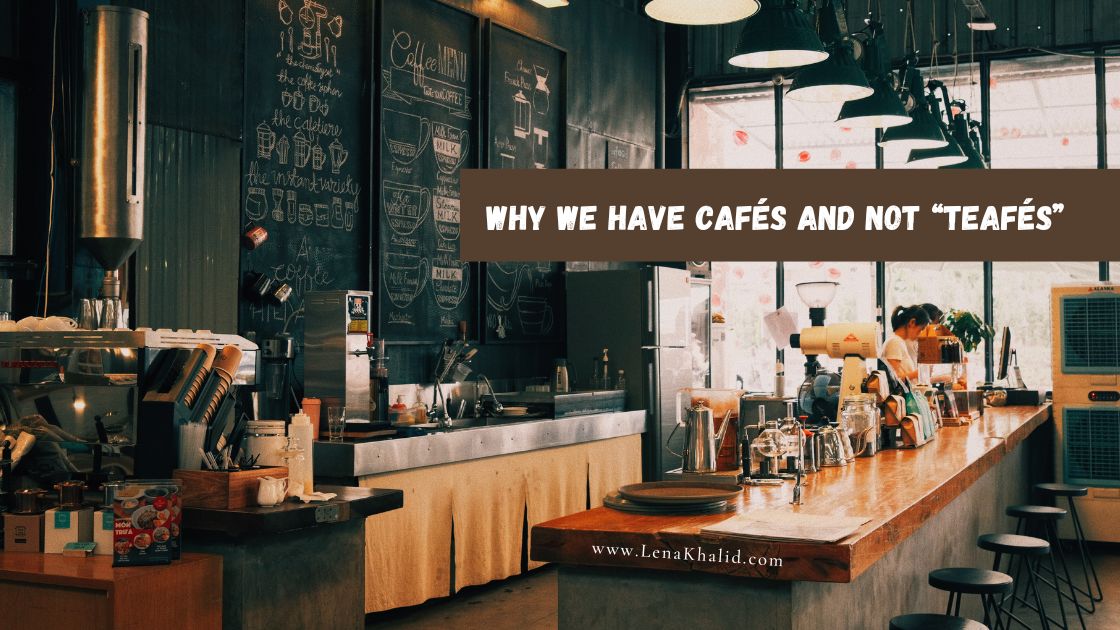
Why We Have CAFÉS and Not “TEAFÉS”
Have you ever stopped and wondered why the world is filled with cafés, but no one has ever heard of a “teafé”?
It sounds funny at first — but once you think about it, the answer reveals something deeper about culture, business, productivity, and ambition.
The truth is :
Coffee didn’t just become popular as a drink.
Coffee built a culture.
And culture creates places.
Coffee Became a Place. Tea Stayed a Beverage.

Historically, coffeehouses weren’t just about drinking coffee.
They were places where people :
- Met to exchange ideas
- Discussed politics and business
- Read newspapers
- Wrote, debated, planned, and built things
Coffeehouses were early versions of :
- Co-working spaces
- Startup hubs
- Meeting rooms
- Creative studios
Tea, on the other hand, stayed mostly in :
- Homes
- Ceremonies
- Quiet, personal rituals
Tea was intimate.
Coffee was social.
That difference alone explains why cafés exist.
Coffee Aligns With Work. Tea Aligns With Rest.

Modern society rewards :
- Speed
- Output
- Focus
- Long working hours
Coffee naturally fits this rhythm.
Culturally, coffee signals :
- “Let’s get started”
- “Let’s meet”
- “Let’s work”
Tea sends a different message :
- Slow down
- Wind down
- Relax
There’s nothing wrong with that — but cities were built on urgency, not calm.
Coffee became the drink of doing.
Tea became the drink of being.
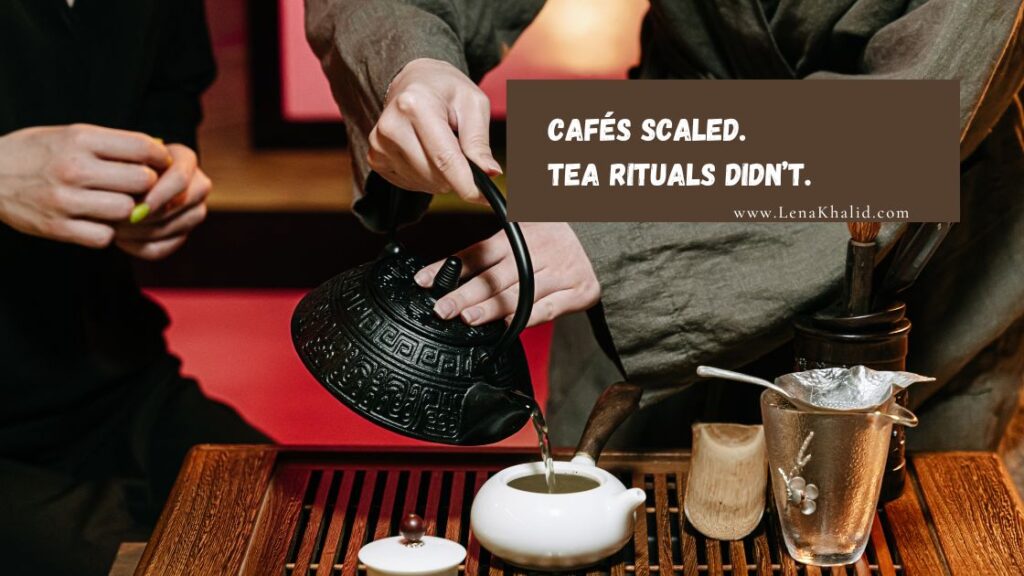
Cafés Scaled. Tea Rituals Didn’t.
From a business perspective, cafés make sense.
Coffee is :
- Fast to prepare
- Easy to standardise
- Highly customisable
- Easy to upsell
Milk choices, syrups, sizes, blends, brewing styles — coffee turned choice into profit.
Tea rituals, by nature :
- Take time
- Require patience
- Resist standardisation
Coffee adapted to urban life.
Tea preserved tradition.

And business always follows what scales.
Coffee Became an Identity

People don’t just drink coffee.
They say :
- “I’m a coffee person.”
- “I need my coffee before anything.”
- “Let’s grab coffee.”
Coffee became :
- A personality marker
- A lifestyle signal
- A shared social language
Cafés didn’t sell coffee alone.
They sold :
- Belonging
- Focus
- A “third place” between home and work
Tea never needed that role — and never tried to claim it.
A (Slightly Uncomfortable) Historical Truth
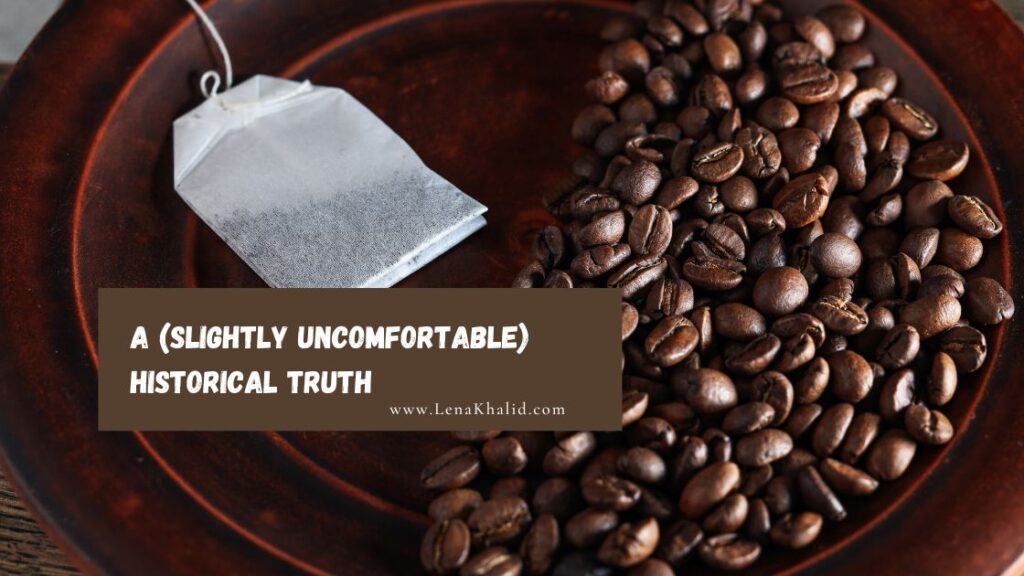
Tea was heavily shaped by :
- Colonial trade
- Monopolies
- Mass distribution
- It became a commodity.
Coffee, in contrast :
- Remained local and artisanal
- Encouraged independent shops
- Supported small producers and café culture
That difference influenced how people experienced each drink — and how businesses formed around them.
Even Language Played a Role
“Café” is :
- Short
- Stylish
- European
- Easy to globalise
“Tea” is :
- Universal
- Everyday
- Less distinctive for branding
We talk about café culture.
We rarely talk about tea venue culture.
Words shape behaviour.
Behaviour shapes business.
So Why Cafés — and Not Teafés?
Because coffee didn’t just wake people up.
- It brought people together.
- It encouraged conversation.
- It powered work.
- It scaled with cities.
Coffee chose ambition.
Tea chose wisdom.
Both are valuable — but only one needed a storefront on every corner.
Coffee’s dominance isn’t about taste.
It’s about :
- Culture
- Productivity
- Social design
- Business scalability
That’s why cafés exist.
And that’s why coffee remains the ritual of entrepreneurs, creators, and builders.
Many entrepreneurs don’t add more drinks to their routine — they optimise what they already do.
If coffee is already part of your daily ritual, you may be curious how some people enhance their coffee experience without changing its taste.
👉 See how this coffee optimisation works
Stop Waiting. Start Doing.
You will love these posts too :

Why Islamic Estate Planning Is More Important Than Many Families Realise
Estate planning is often a topic people avoid discussing. Many assume it is only relevant…

7 Types of Content Small Businesses Should Focus on Right Now
A study from Google known as “Zero Moment of Truth” (ZMOT) emphasized how critical it…
Why Drinking Coffee Is Preferred by Successful Entrepreneurs
Walk into any startup hub, boardroom, co-working space, or early-morning airport lounge, and you’ll notice…